TARPONVILLE LODGE, FLY FISHING IN COSTA RICA
HOSTED DATES:
MAY 7-15, 2028
* Trip price - $5300pp. Items included and not included listed in trip paperwork
The Travel: Guests fly into San Jose where they spend the night, and meet the rest of their group. The following day, guests travel by van through the rain forest to the Caribbean coast of the country. Drive time is about five hours. There is an option to take a domestic flight, and this is often used after the fishing week.
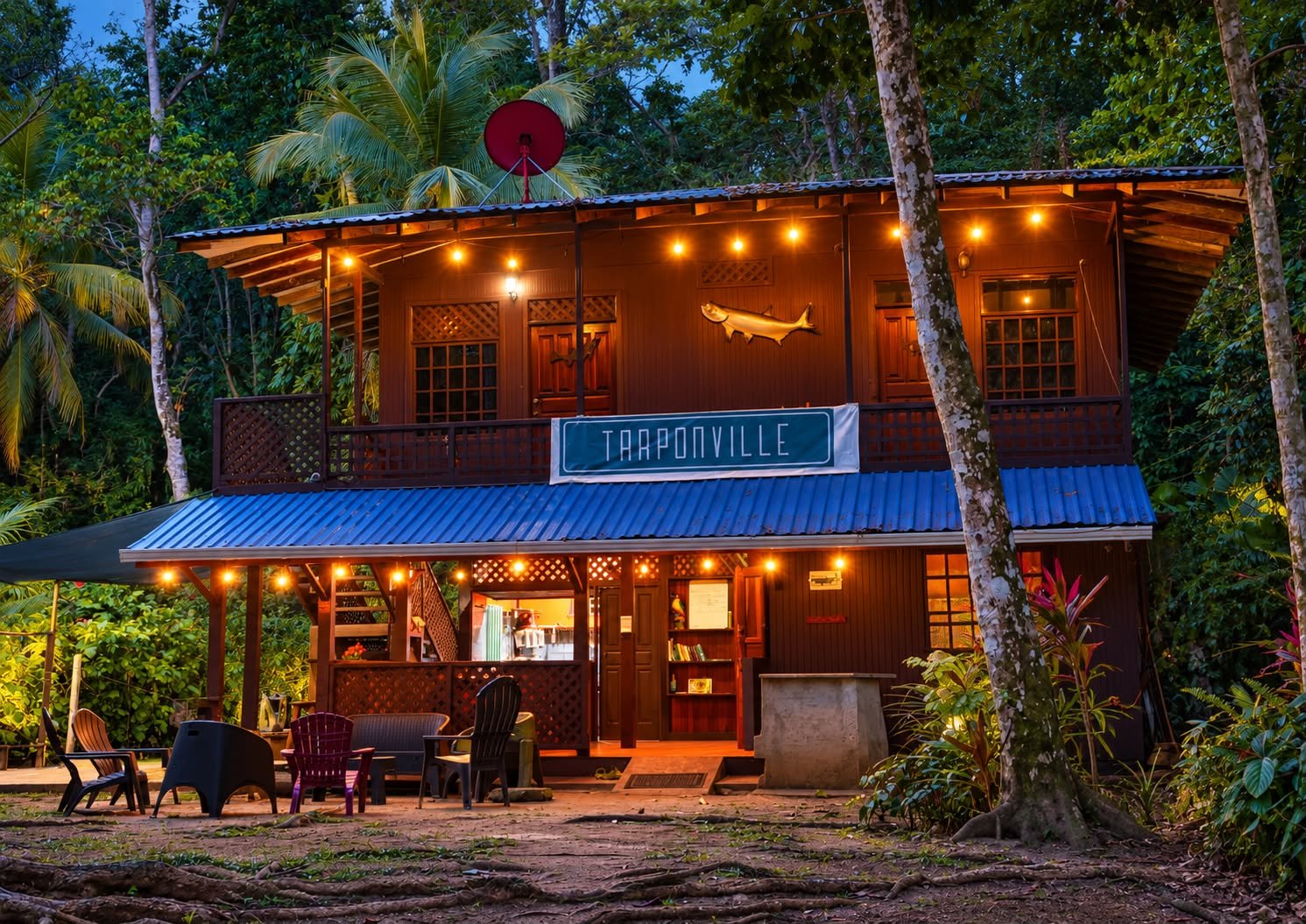
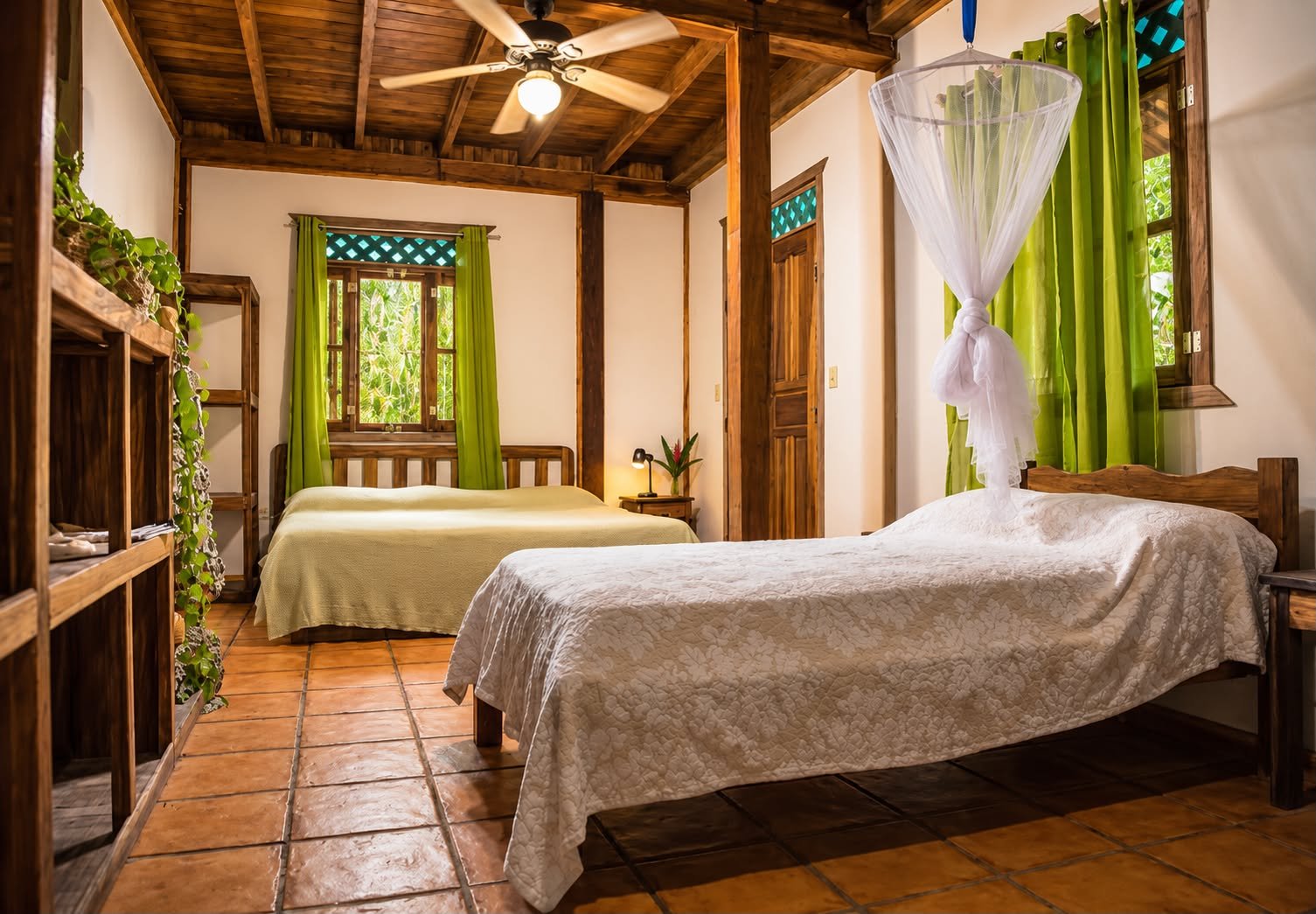
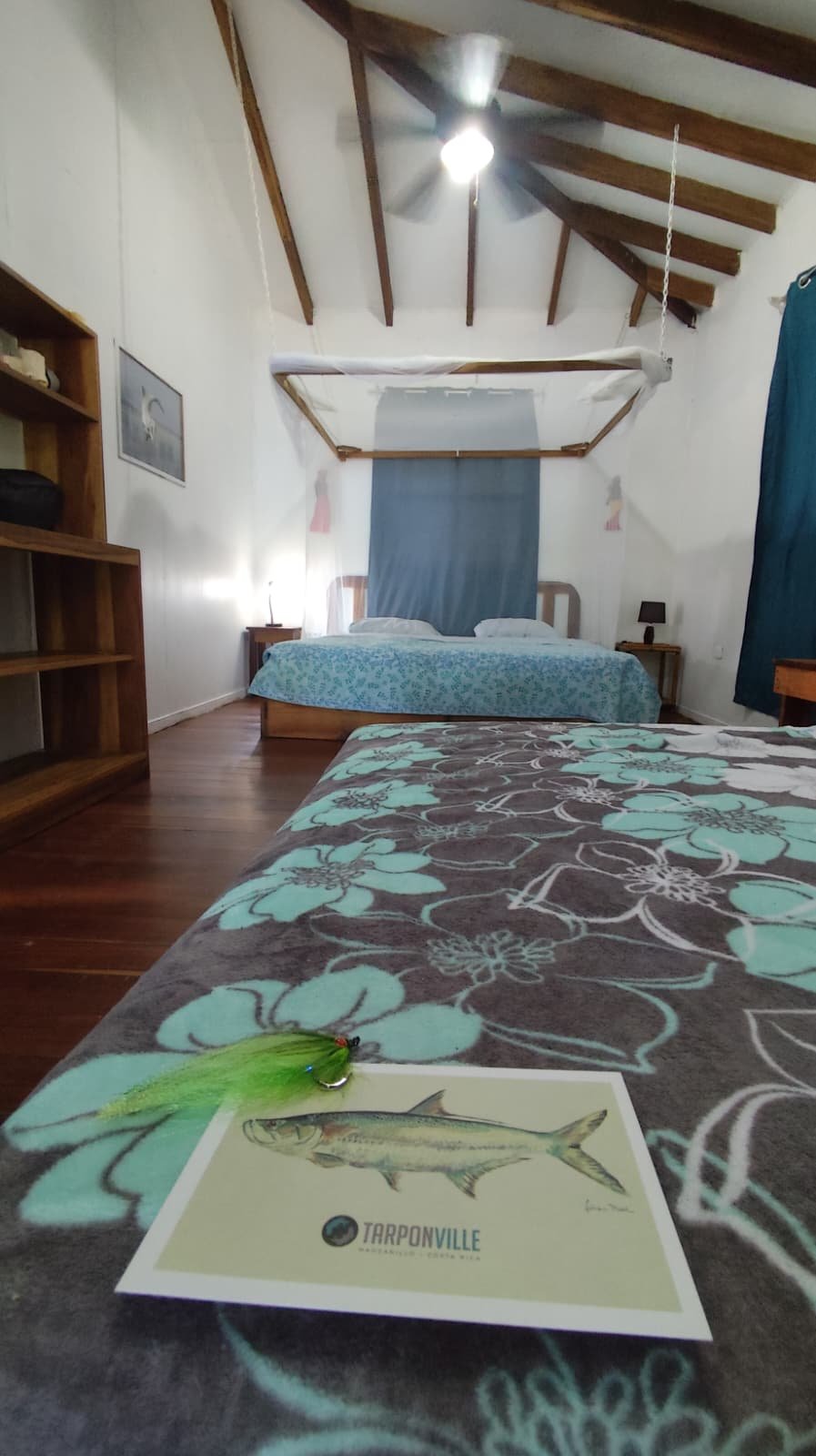
The Lodge: Tarponville is a simple, comfortable, two-story wooden lodge set just outside the village of Manzanillo, a few yards from a swimmable beach and the coral reef out front. It isn't fancy, and that's part of its charm — this is a fishing lodge built around the water, not a resort. Covered decks, string lights, and lounge chairs under the palms make it an easy place to unwind after a day on the water, and it feels more like a jungle beach house than a hotel
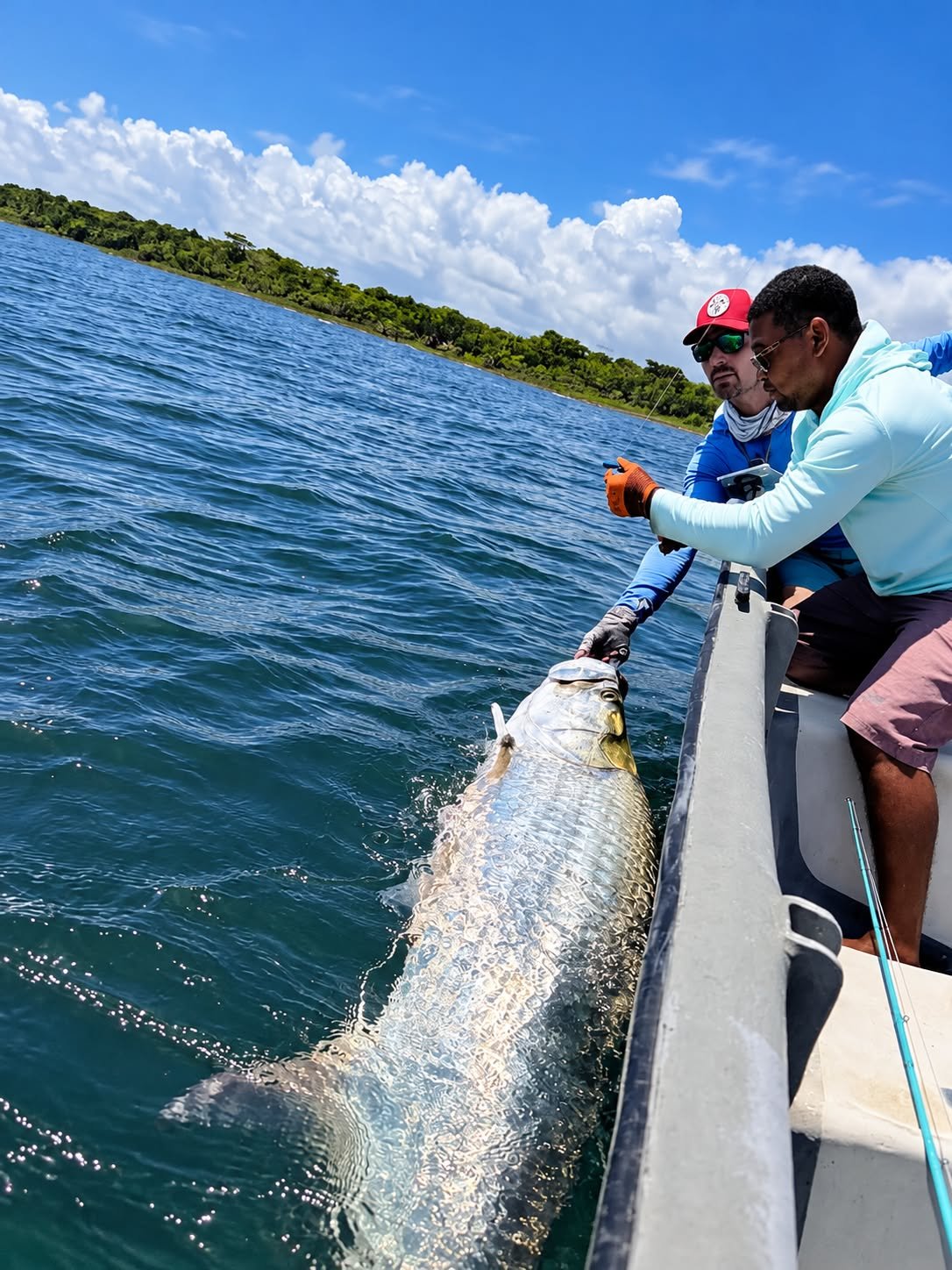
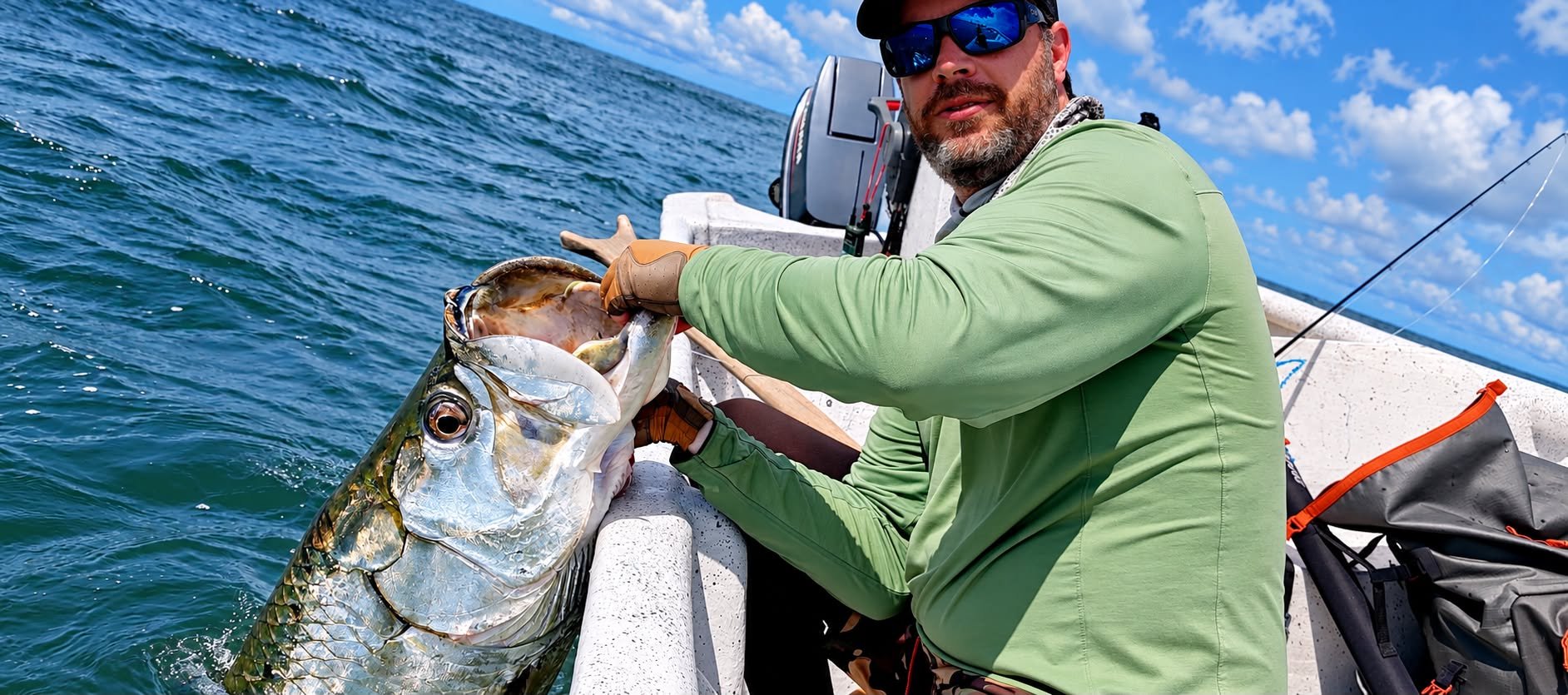
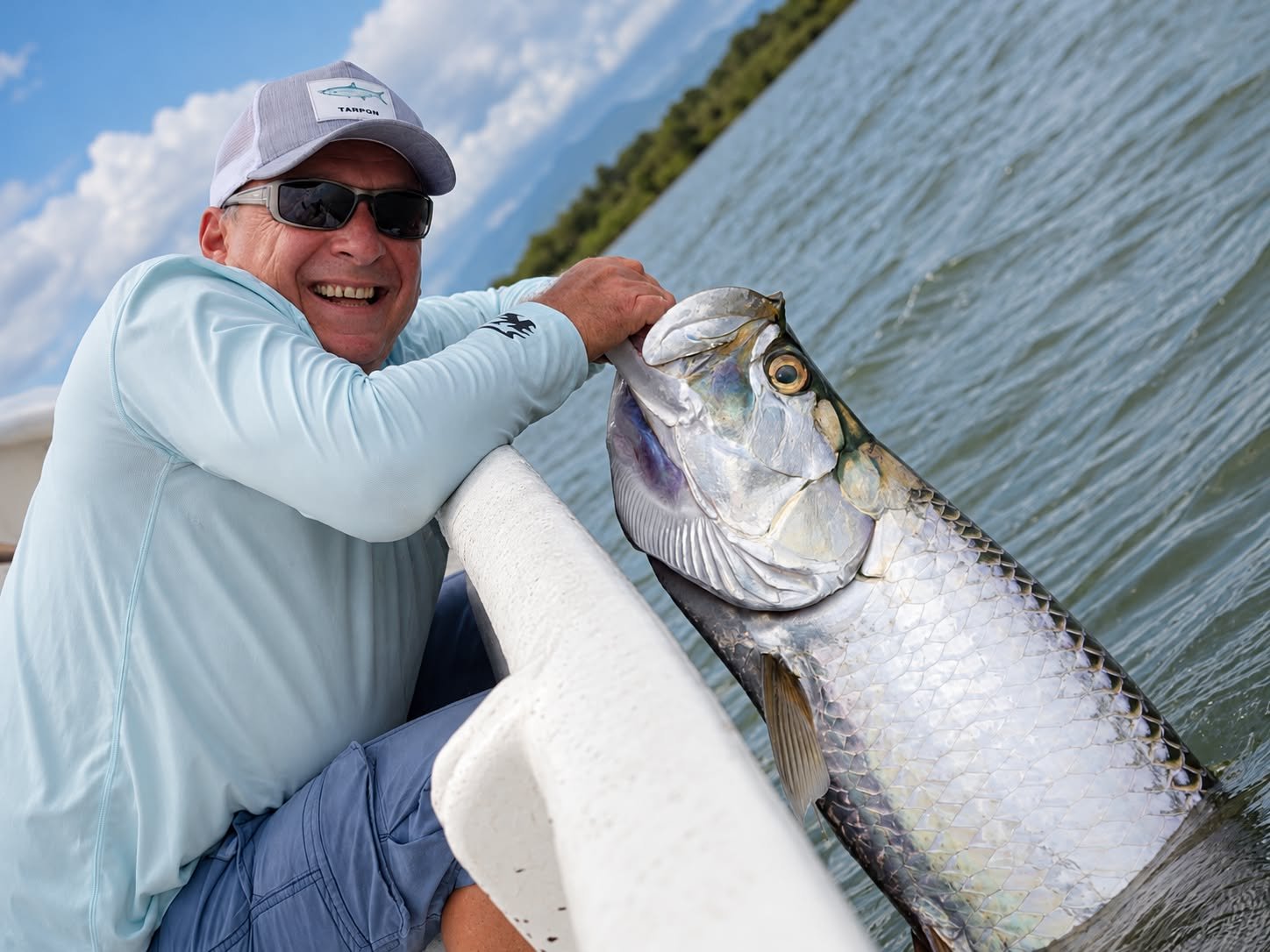
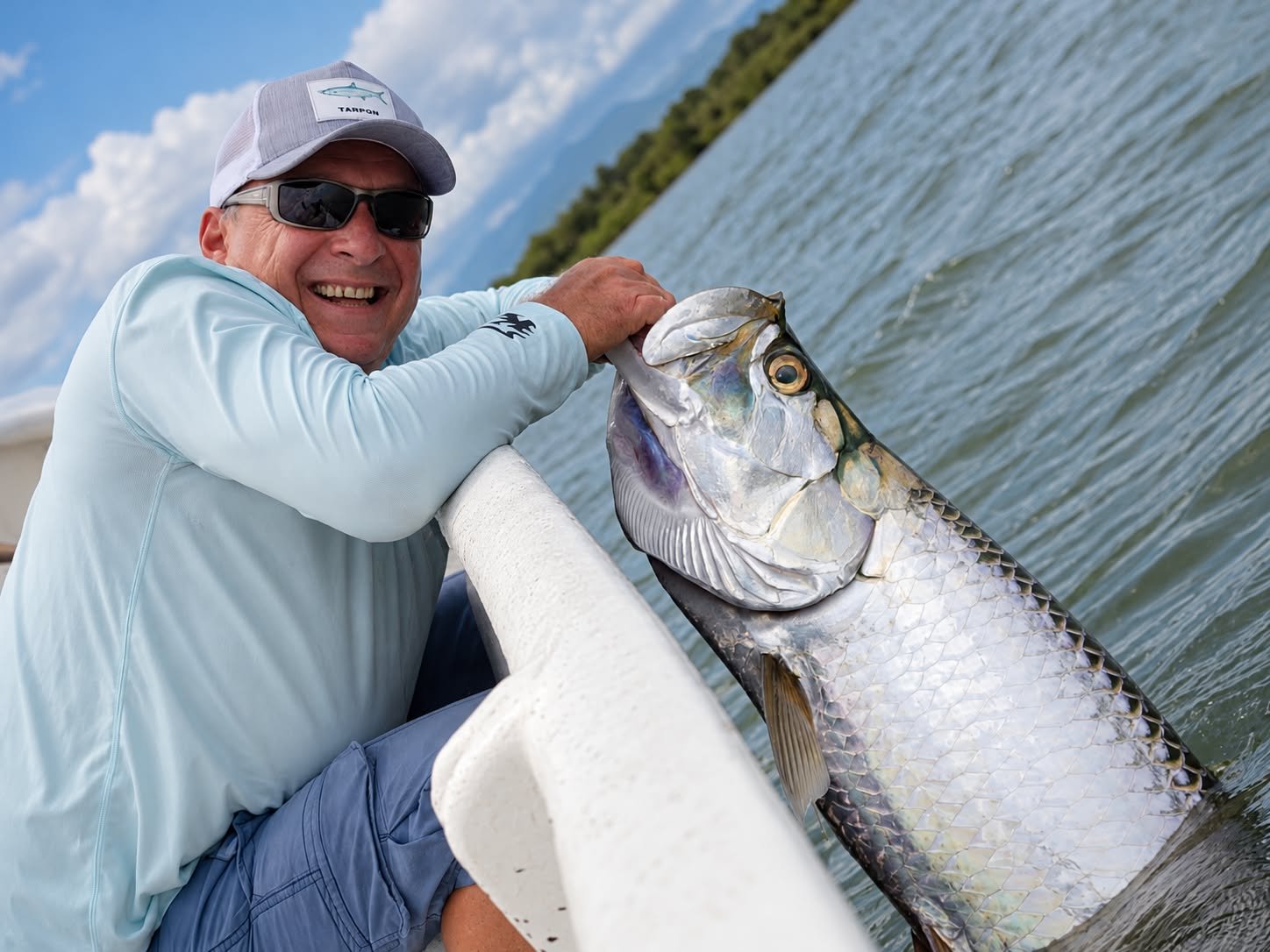
The Fishing: Tarpon are the reason to come — big, acrobatic fish averaging 90–120 lbs, with fish over 150 lbs a real possibility every day. Snook prowl the river and lagoons, jacks and snapper hit anything that moves, and a permit flat near the lodge fishes during certain tides. We schedule our hosted weeks around the best seasons for tarpon on this coast.
Costa Rica has long been one of the most popular destinations in Central America, and for good reason. Its people are warm and welcoming, the country is stable and easy to travel, and it is just a short flight from most of the United States. "Pura vida" is more than a saying here; it really is a way of life. Costa Rica has worked hard to protect its natural beauty, and a remarkable amount of the country is set aside as national parks and wildlife refuges. Rainforests, volcanoes, cloud forests and two very different coastlines all fit into a country about the size of West Virginia.
Most visitors head to the Pacific side. We are going the other way, to the southern Caribbean coast, just above the border with Panama. This corner of Costa Rica has a feel all its own: a laid-back Afro-Caribbean culture, reggae drifting out of small beach towns, rice and beans cooked in coconut milk, and jungle that runs right down to the sand. Howler monkeys are a common wake-up call, sloths hang in the trees, and dolphins and manatees share the water.
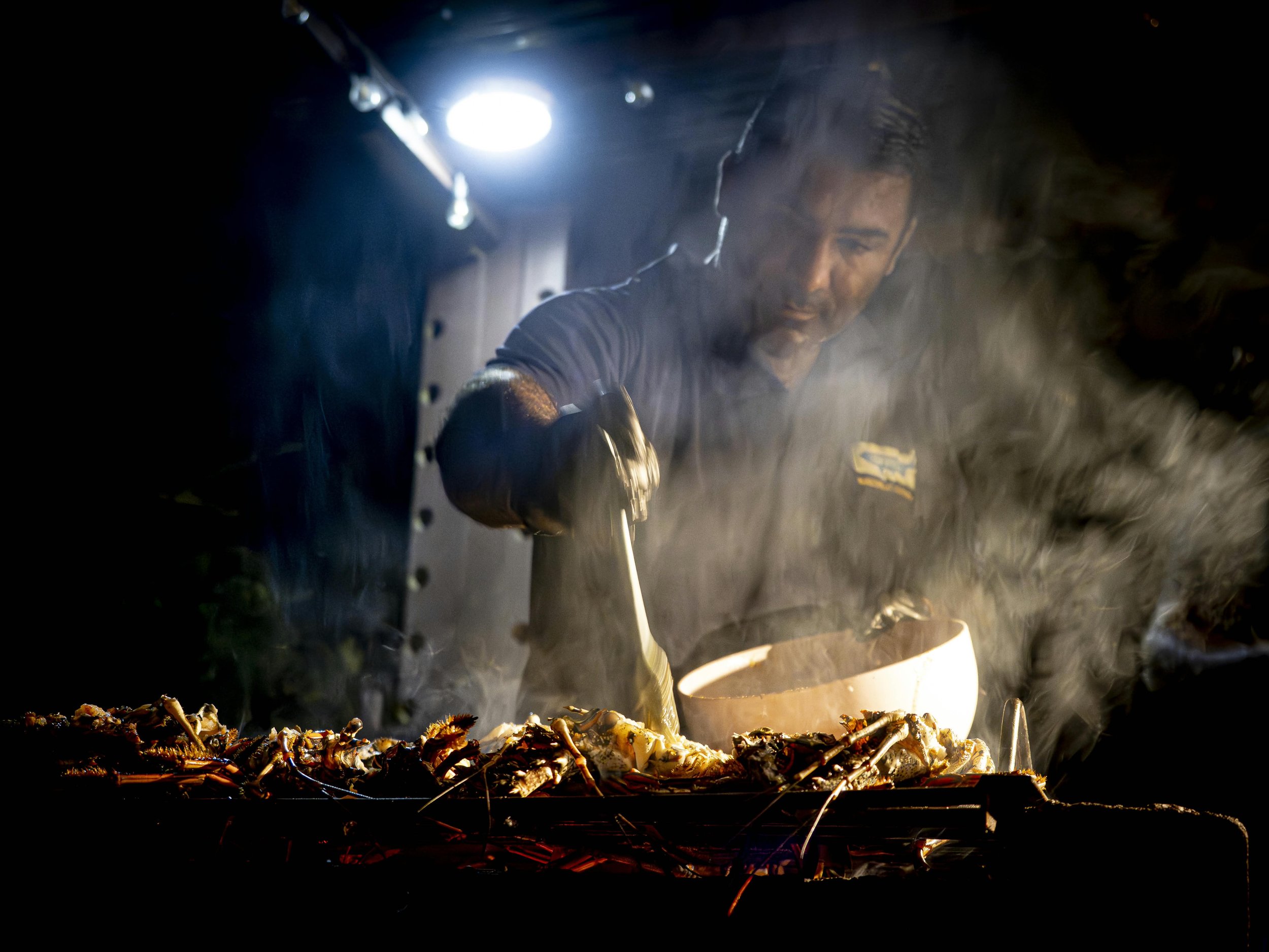
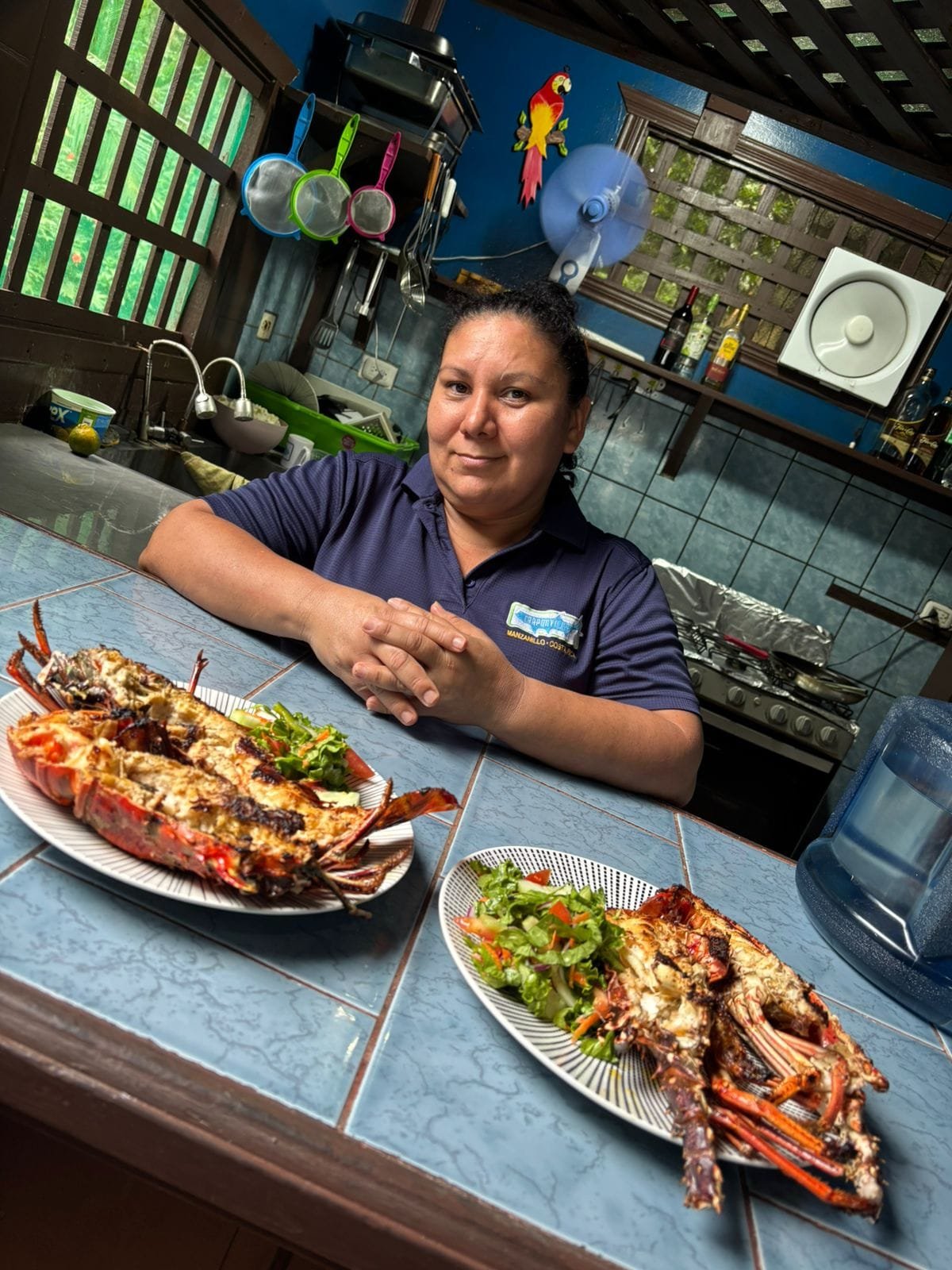
Tarponville Lodge sits just outside the village of Manzanillo, inside the Gandoca-Manzanillo Wildlife Refuge, and it is the only lodge fishing this stretch of coast. The lodge is simple, not fancy, but it is clean and comfortable, and that is a big part of its charm. It is a two-story wooden building a few steps from the beach, with covered decks, lounge chairs under the palms and a reef right out front.Rooms have private bathrooms, air conditioning and ceiling fans. Meals are Caribbean-style, made by local cooks with fresh fish, lobster, fruit and vegetables, and every evening starts with happy hour. It feels much more like a jungle beach house than a hotel, which suits a group of anglers perfectly.
The fishing, of course, is why we come. For years, anglers have heard stories of big numbers of giant
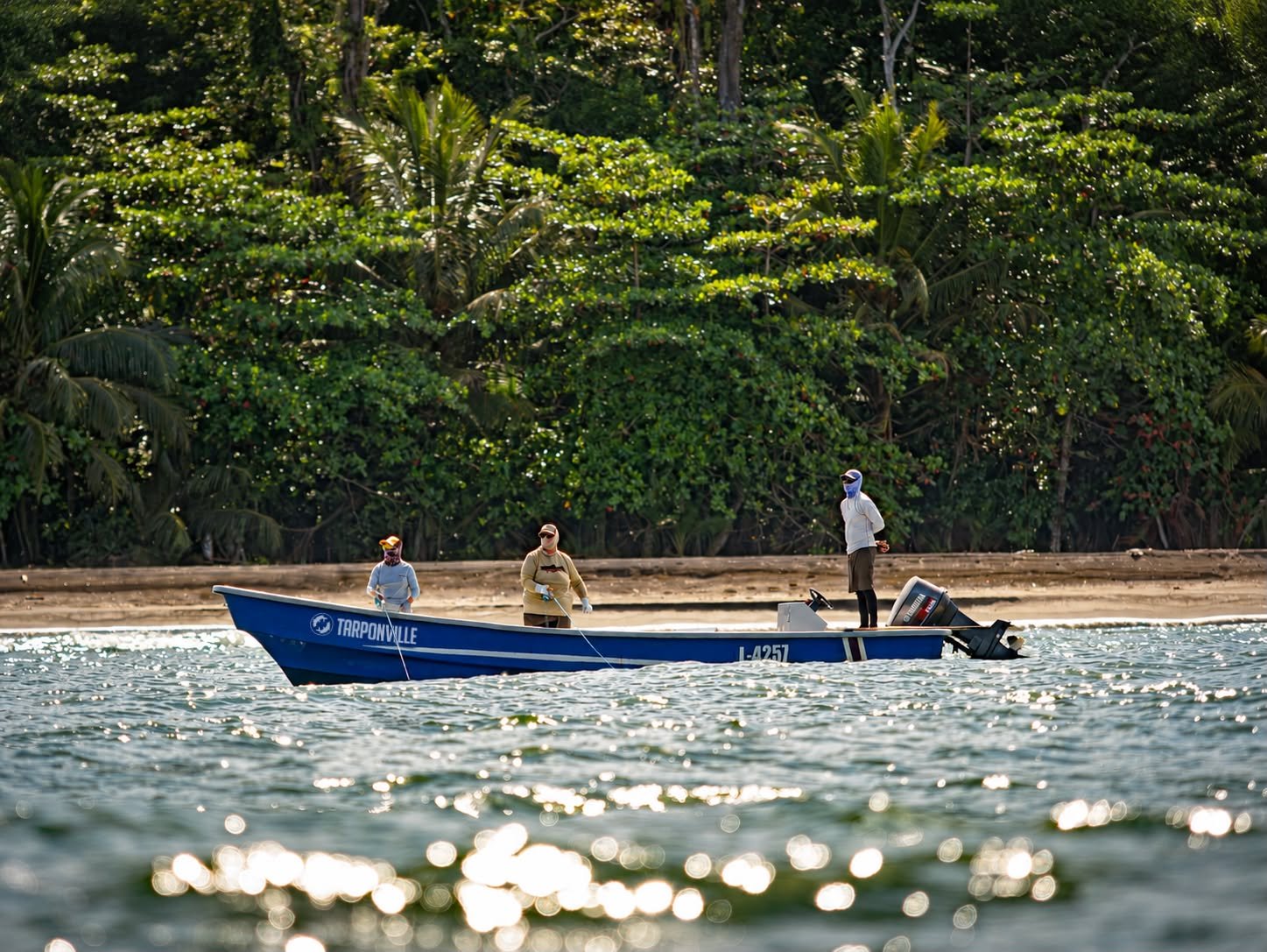
tarpon along this coast, and they are true. Tarpon here average 90 to 120 pounds, and much larger fish are a real possibility every day. We fish from pangas, two anglers per boat with a captain and guide, much of the time around the mouth of the Sixaola River and the nearby coastline. Guides look for rolling fish, birds and bait, and we cast to where fish have been seen rolling and feeding, or blind-cast and strip intermediate lines through the deeper water. When the tide turns, the fish can switch on, and the action can be nonstop. Hooking a tarpon this size, and watching it clear the water three or four times, is something you will never forget.
Tarpon are the main event, but they are not the only option. Snook live in the river and nearby lagoons, jacks and snapper will crash just about anything that moves, and a permit flat near the lodge fishes during certain tides. Days on rougher water can be spent in the more protected lagoons and river.
Getting there is easy. The group meets in San José and spends the first night there, then travels by van to the lodge the next morning, a scenic drive of about five hours over the mountains and down through rainforest and banana country. At the end of the week, we save time by flying from Limón back to San José, a flight of about 40 minutes, so many guests can make it home the same day.
We schedule our hosted weeks around the best seasons for tarpon on this coast, and we keep our groups small. If you have ever wanted to tangle with a truly big tarpon, in a wild place that very few anglers have seen, Tarponville is the trip.